
In medical device design, every material has a role to play. Foam may seem simple, but choosing between open-cell and closed-cell polyurethane (PU) foam can greatly affect performance, comfort, and patient safety.
At first glance, both types of foam look similar. The main difference lies in their internal structure, which changes how the foam functions, feels, and performs in your device.
Understanding the Structure
Closed-Cell Foam
Closed-cell PU foam consists of tiny, sealed bubbles filled with gas and surrounded by polymer walls. Because these cells are not connected, the foam is dense and firm, keeping out moisture and air. This makes it ideal for applications that require durability, impact protection, and easy cleaning.
Open-Cell Foam
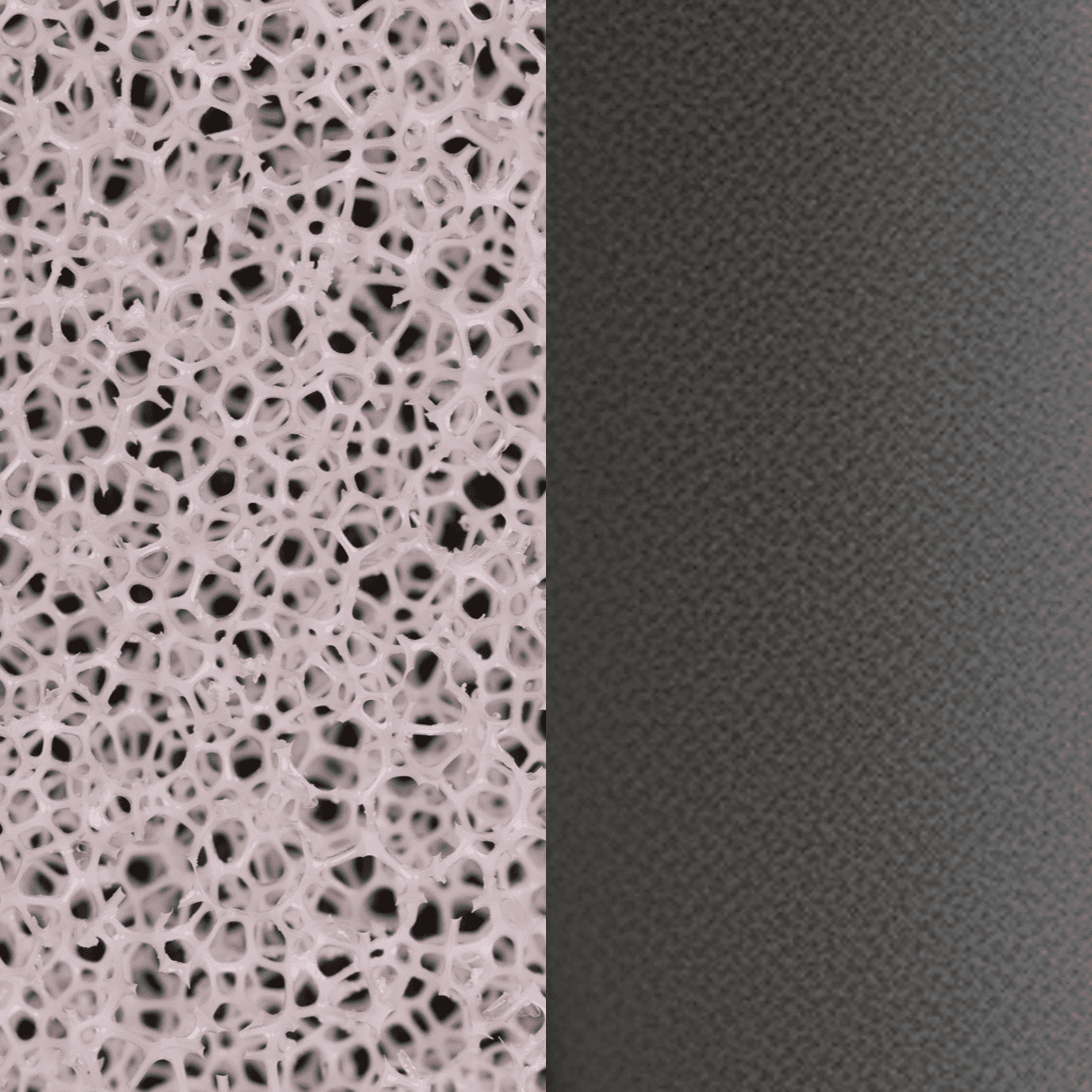
Open-cell foam is made by intentionally breaking cell walls during production, creating a network of interconnected pores. This allows air and fluids to pass through, making the foam soft, breathable, and flexible. It adapts well to complex shapes and offers comfort in patient contact and sensitive uses.
Benefits of Closed-Cell Foam
Closed-cell foam is best when you need strength, cleanliness, and stability.
• Easy to clean and reuse: Its non-porous surface keeps out liquids so that it can be disinfected between uses.
• Long-term patient positioning and support: Gives firm, even support to help prevent pressure injuries during long procedures.
• Durable cushioning for equipment: Absorbs impact and protects delicate instruments or imaging devices.
• Hygienic grips and handles: Provides a smooth, moisture-resistant surface that improves control and safety during surgical or diagnostic procedures.
In summary, closed-cell foam is a reliable choice for reusable, high-contact, or precise medical applications.
Benefits of Open-Cell Foam
Open-cell foam offers benefits centered on comfort, airflow, and adaptability.
-
- Comfort and Conformability
Open-cell foam compresses easily and shapes itself to whatever surface it touches. Its softness helps reduce irritation and makes things more comfortable for both patients and operators. - Breathability and Airflow
Since the cells are connected, air and moisture can move through the foam. This helps control temperature and humidity in devices worn for long periods. - Fluid Management and Customization
Open-cell foam can absorb and manage fluids, making it ideal for filtration, diagnostics, or drug-delivery systems. If you need fluid resistance, Foamtec Medical can make hydrophobic open-cell foam that remains breathable while keeping moisture out. - Cost-Effective Versatility
For many positioning or cushioning applications, open-cell PU foam performs well and usually costs less than closed-cell foam.
- Comfort and Conformability
Where Each Type Excels
Closed-Cell Foam vs. Open-Cell Foam
Reusable and easy to disinfect. Soft, breathable, and flexible
High durability and moisture resistance allow airflow and moisture control
Ideal for support pads and equipment cushioning. Great for filtration, cushioning, and patient-contact components
Suitable for hygienic grips and precise handling. Customizable for absorbent or hydrophobic performance
Both types of foam play an important role in medical technology. The key is understanding how each property aligns with your device’s needs.
If you’re looking for a deeper technical breakdown of how these foam structures differ, we explore the topic in more detail in our related article.
Read our other blog: Open-Cell vs. Closed-Cell Foam
Foamtec’s Manufacturing Advantage
Material choice is only part of the story. How that foam is made determines its quality, consistency, and safety.
At Foamtec Medical, all open-cell PU foam is manufactured and converted in one US FDA-registered, ISO 13485-compliant campus in Thailand. This vertically integrated approach provides:
• Full traceability from raw material to finished component, supporting regulatory compliance.
• Reduced contamination risk by not allowing fire retardants and other chemicals that affect cytotoxicity and biocompatibility for the foam and final devices
• Faster development cycles thanks to in-house engineering, prototyping, and manufacturing.
• ISO 17025 compliant material characterization, microbiology, and cytotoxicity laboratories in-house
Our customers rely on us for both technical expertise and manufacturing precision, and that combination sets us apart.
Foamtec’s medical-grade polyurethane foam is made with advanced open-cell, free-rise, slab stock technology. Our thermal reticulation process produces clean, particle-free foam, ideal for devices where liquid and air flow are critical. Vertical integration gives full traceability from chemicals to finished devices, reducing risk. Foamtec Medical provides a complete solution from material development to finished component, all in one facility.
Whether you need absorbent, breathable foam for diagnostic or comfort applications, or hydrophobic open-cell foam for specialized devices, we deliver consistent quality and full traceability every step of the way.
At Foamtec, we’re more than foam suppliers. We’re your partners in creating safer, smarter, and more comfortable medical devices from foam to finish.